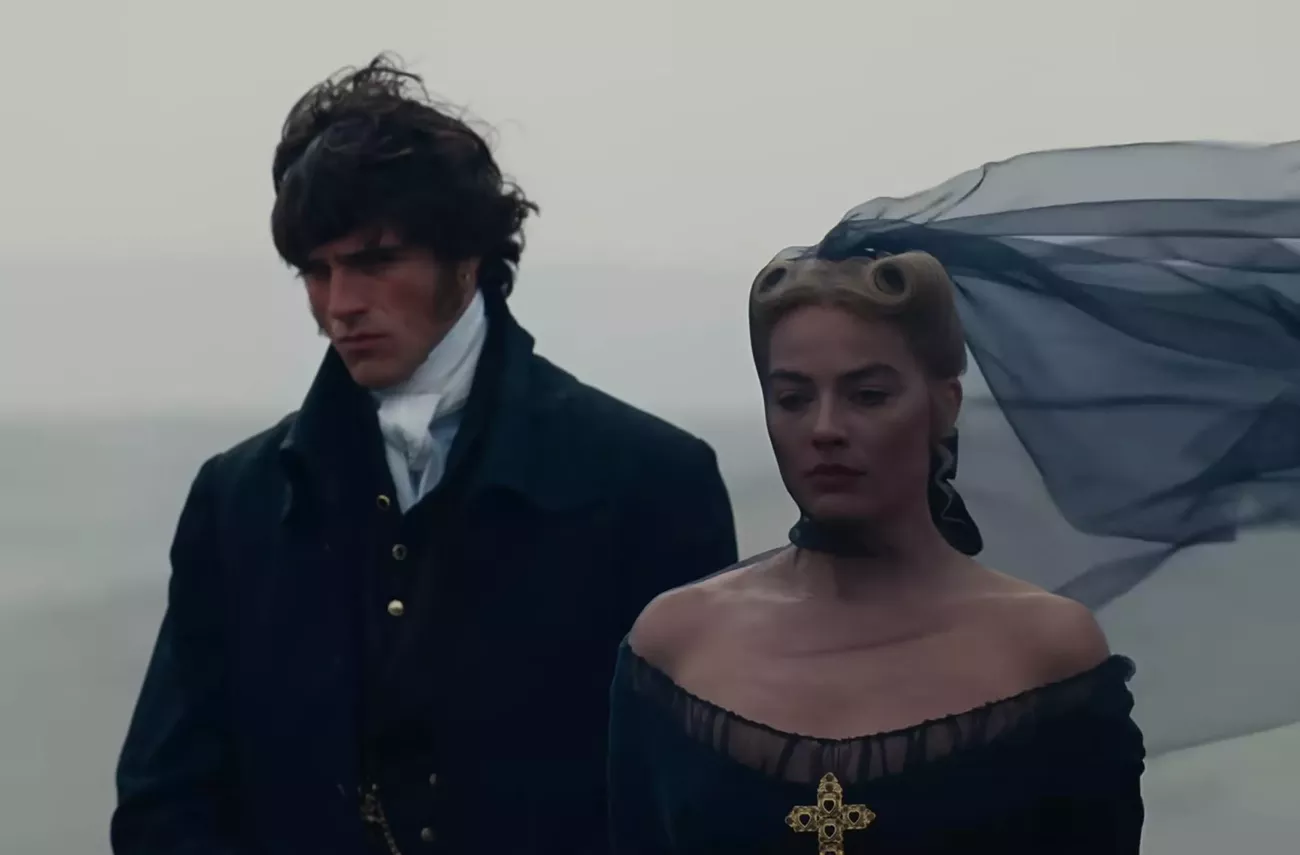
I think anyone who has read Emily Brontë’s Wuthering Heights can agree that it’s a challenging read. Perspectives change chapter to chapter, Joseph the servant’s dialogue is basically unreadable, and most of Heathcliff and Cathy’s love story is played out through the next generation after—spoiler alert—Cathy dies during childbirth. In Emerald Fennell’s adaptation, she focuses on the most engaging elements of the book: Heathcliff and Cathy’s love, passion, and mutual destruction.
The film never claimed to be a perfect mirror of the book. Fennell herself said, when explaining the quotes around the title of her adaption: “What I can say is I'm making a version of [the book]. There's a version that I remembered reading that isn't quite real. And there's a version [where] I wanted stuff to happen that never happened. And so it is Wuthering Heights, and it isn't.”
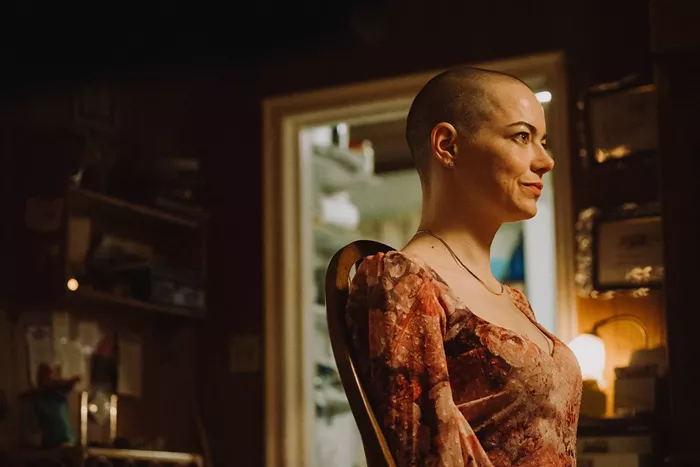
With this in mind, she was successful. Each character felt like a doll Fennell uses to play out her version of the story—the obsessive childhood bond between Heathcliff and Cathy at Wuthering Heights (Cathy’s family home), Cathy’s eventual choice of social status over love, her early death, and Heathcliff’s lifelong spiral into revenge. A literal doll motif continuously shows up in the film, too, beginning with a young Cathy, who watches a man being hanged while tightly clutching her doll. Again, when Cathy marries the wealthy suitor Linton (Shazad Latif), and her new sister-in-law, Isabella (Alison Oliver), gifts her a handmade doll made using Cathy’s own collected hair. And, most notably, in the large dollhouse replica of Thrushcross Grange, the Linton estate, that stands looming behind the dining-room table. So, who better to play the starring role than Barbie herself, Margot Robbie?
At first, I was highly skeptical of the casting choices. Jacob Elordi was not at all how I imagined the scrappy, tortured, and probably-not-white orphan boy Heathcliff. But the longer I sit with the film, the more I can accept that he’s one of the only actors who could make this complex character work on screen. Brontë’s Heathcliff is cruel, insensitive, and brooding, and throughout the novel, I thought, why in the world are these women lusting after such an unlikable brute? But Elordi as Heathcliff—sweaty, grinning, and aroused—makes it make sense. You, too, would fold under the spell of his dark eyes with his fingers in your mouth. And, although Fennell’s interpretation of Linton is far more likable than Brontë’s, the choice is clear: Heathcliff eats Cathy out and licks the tears from her cheeks. Linton rails her in missionary while she dissociates.
Perhaps the most surprising element (and what I anticipate being the most controversial) is the innocent Isabella’s consent to Heathcliff’s cruel treatment of her. In the film, Heathcliff seduces Isabella (and later asks for her hand in marriage) only to punish Cathy, which he says explicitly. “Do you want me to stop?” he asks, several times, while taking off her nightgown. Isabella shakes her head no. After they marry, Nelly (Cathy’s companion, played by Hong Chau) stops by to see the newlyweds, only to find Isabella sporting a dog collar and chained up on her hands and knees, literally eating out of Heathcliff's hands. Nelly, horrified, attempts to free her, only to realize that the chains are not attached to anything—Isabella is a willing participant in this sadistic relationship. (Believe it or not, this is not how things go in Brontë’s 1847 novel.)
Elordi has managed to become the internet’s boyfriend through playing frightening men (see: Euphoria, Priscilla, Frankenstein). I would absolutely let that man be mean to me, and that’s what makes this film an alluring dollhouse to play inside.
Many people, including myself, were outraged upon the trailer’s release due to the not-period-accurate costumes. How silly I feel about that now! While living at Wuthering Heights, Cathy dresses in tattered cotton skirts and billowing linen blouses. Once she marries Linton, everything turns synthetic—iridescent lamé dresses, tight corsets, gaudy costume jewelry, and rhinestones glued to her cheeks—essentially, the wardrobe I would have dreamed up for myself as a 5-year-old who was obsessed with princesses and pop stars. The costuming plays a larger role in the film to show that Cathy is actually restricted by Linton, despite his wealth and status, and can only breathe in the arms of Heathcliff. To sum it up, the costumes are, as Aretha Franklin once said so eloquently: “great gowns, beautiful gowns.” Fun to look at, but not so fun to be trapped inside of.
This contrast between organic and synthetic is also present in Charli XCX’s soundtrack, which is equal parts epic string score and moody electronic pop. It isn’t as jarring in this period piece as you might imagine it to be.
As other critics have already noted, this is an extremely wet movie, soaked in uncooked egg, blood, spit, tears, snail slime, cooking oil, and rain, which adds a visceral quality to the film. Its lush, tactile visuals evoke whimsical movies of the past like the arthouse pornography of Polish director Walerian Borowczyk, surrealist stop-motion master Jan Švankmajer, the later films of Ingmar Bergman (Cries and Whispers, Fanny and Alexander), and Sofia Coppola’s Marie Antoinette. All things I suggest watching if you find yourself enjoying this decadently horny movie.
Look, I didn’t want to like it. I walked into the theater as a skeptic, but left feeling enraptured by Fennell's vision. I give it four out of five broken eggs (see the movie and you’ll understand).